
category
Dec 9, 2025
When the gallery has a lease: The story behind 'Maintenance Request'
Student Life
Most art galleries present art in spaces that feel perfect, untouched, and far removed from the way people live. "Maintenance Request," the one-night exhibition curated by seniors Maya Iskoz and Max Schreiber, celebrated the opposite.
Hosted on Nov. 7, 2025 and designed by Fiona Lyons-Carlson, who graduated from WashU in 2025, in a student apartment, the show became one of the most surprising art moments of the semester.
"Things are always breaking," Schreiber said. "It's your classic student apartment: over a hundred years old and held together by a collection of quick, half-done repairs."
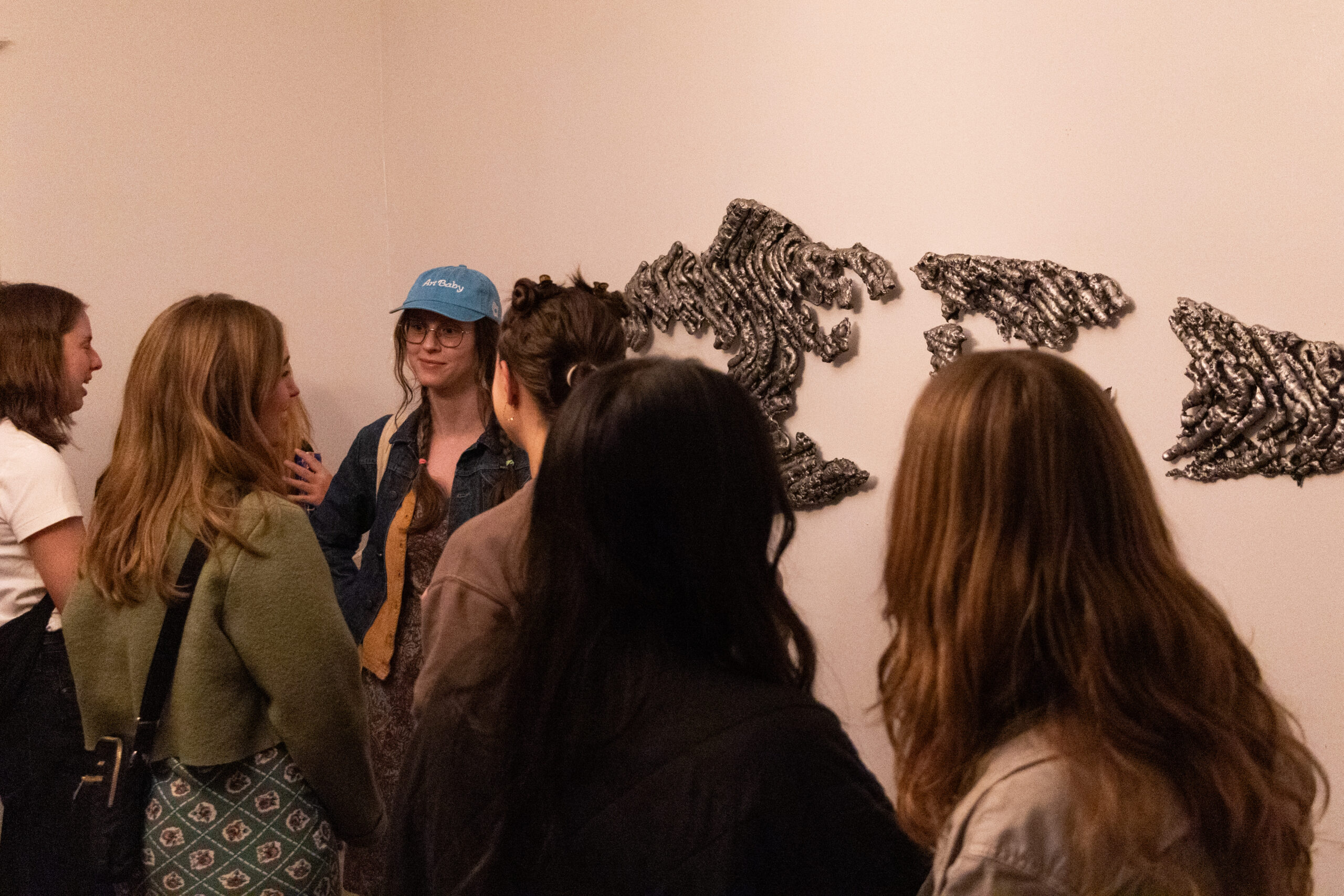
That lived-in chaos shaped everything. The exhibition featured works by graduate students Payton Landes, Levi Walker, Zach Johnson, Shiyao Fu, senior Robin Pyo, and the curators themselves. The pieces used materials such as metal, wax, brick, paper, and found wood, while the video installation room continued that handmade aesthetic with cinder blocks and scavenged scraps. Viewers moved through the rooms naturally, drifting between sculptures, prints, and glowing screens.
"The video room is reflective of the DIY nature of an apartment show," Iskoz said.
If the format sounds informal, the intention behind it was anything but. Both curators spoke about how little of the artistic process the community ever gets to see.
"People don't realize how much work is being done," Schreiber said. "A single sculpture may be the 30th iteration of something. Making is slow, and it's mostly invisible."
The apartment made that invisible labor strangely visible. Placing art in a place where students cook, cry, stretch canvases, host friends, and submit assignments blurred the boundary between work and life. For Iskoz, the blur is the point.
"I don't really differentiate between my free time and my work time ... it's a lifestyle. You're thinking about it all the time."
She added that the behind-the-scenes work of making art demands far more time and energy than people realize.
"Half of makin