
category
Dec 9, 2025
Trump's ceasefire plan for the Israel-Hamas war faces pitfalls as it moves into a new phase
The Herald Journal
DOHA, Qatar (AP) -- With the remains of one hostage still in Gaza, the first phase of the U.S.-brokered ceasefire in the war between Israel and Hamas is nearly complete, after a two-month process plagued by delays and finger-pointing.
Now, the key players -- including Israel, the Palestinian militant Hamas group, the United States and a diverse list of international parties -- are to move to a far more complicated second phase that could reshape the Middle East.
U.S. President Donald Trump's 20-point plan -- which was approved by the U.N. Security Council -- lays out an ambitious vision for ending Hamas' rule of Gaza. If successful, it would see the rebuilding of a demilitarized Gaza under international supervision, normalized relations between Israel and the Arab world and a possible pathway to Palestinian independence.
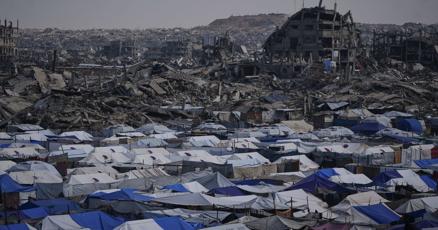
But if the deal stalls, Gaza could be trapped in an unstable limbo for years to come, with Hamas remaining in control of parts of the territory, Israel's army enforcing an open-ended occupation and its residents stuck homeless, unemployed, unable to travel abroad and dependent on international aid to stay alive.
Sheikh Mohammed bin Abdulrahman Al Thani, the prime minister of Qatar and a key mediator, said over the weekend that the ceasefire is at a critical point, while Israeli Prime Minister Benjamin Netanyahu is set to travel to the White House this month to discuss the next steps.
Here is a closer look at the next stages of the ceasefire and the potential pitfalls.
Troops for Gaza
Trumps plan calls for the formation of an international force -- known as International Stabilization Force -- to maintain security and train Palestinian police to one day to take over. That force has not yet been formed, and a deployment date has not been announced.
Some countries -- including Egypt, Turkey, Indonesia, Pakistan and Indonesia -- have expressed willingness to participate. But no firm decisions have been made.
A U.S. official, speaking on conditi